
For many CNC operators, woodworkers, and production shops, one of the most common questions is what is a spiral router bit used for. While spiral router bits are widely recommended, their full range of applications is often misunderstood—especially compared with traditional straight-flute router bits.
In this guide, we’ll explain the most common spiral router bit uses, how different spiral router bit types are applied in real machining scenarios, and why spiral designs are preferred in CNC routing, router table work, and production environments.
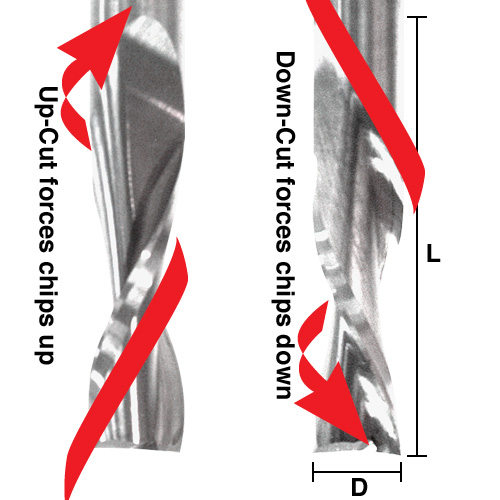
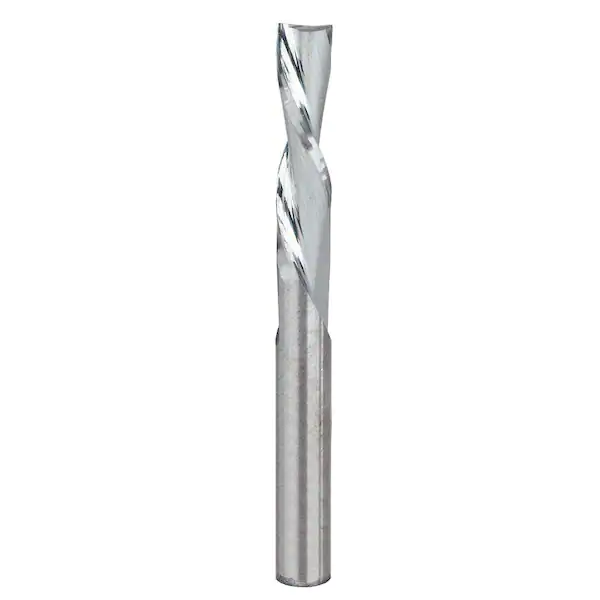
A spiral router bit features a helical cutting edge that continuously engages the material as it rotates. This spiral cutting action actively manages chip direction, unlike straight-flute bits that leave chips trapped in the cutting zone.
Because of this design, spiral router bits offer:
Better chip evacuation
Reduced heat buildup
Smoother surface finishes
More stable cutting behavior
These advantages explain why spiral tools are increasingly used in CNC routers, production woodworking, and high-efficiency routing operations.
The most common spiral router bit uses include:
Edge trimming and finishing
Template and pattern routing
Slotting and groove cutting
Plunge cutting and pocketing
Mortising and joinery
Engraving and profiling
Spiral router bits are suitable for a wide range of materials such as wood, MDF, plywood, plastics, acrylic, and non-ferrous metals.
In CNC routing, spiral router bits are often the default choice. CNC machines run at high RPM and continuous feed rates, which makes chip evacuation critical.
Spiral designs help move chips away from the cut, reducing recutting and improving consistency. This makes spiral router bits ideal for:
Long CNC cutting cycles
Nested-based manufacturing
Repetitive production routing
High-speed profiling
Compared with straight tools, spiral designs provide more reliable results in CNC environments.
For trimming tasks, spiral tools are commonly used as:
Spiral trim router bit
Spiral flush router bit
These tools are widely applied in laminate trimming, template routing, and panel finishing. The spiral cutting action helps prevent tear-out and improves edge quality—especially on plywood and laminated materials.
Flush-trim spiral designs are particularly useful when precise alignment with templates or patterns is required.
A spiral plunge router bit is designed to enter material vertically before moving laterally. This makes it suitable for:
Slot creation
Pocket machining
Interior cutouts
CNC plunge operations
Straight router bits often struggle with plunge entry, while spiral plunge tools provide controlled engagement and stable depth accuracy.
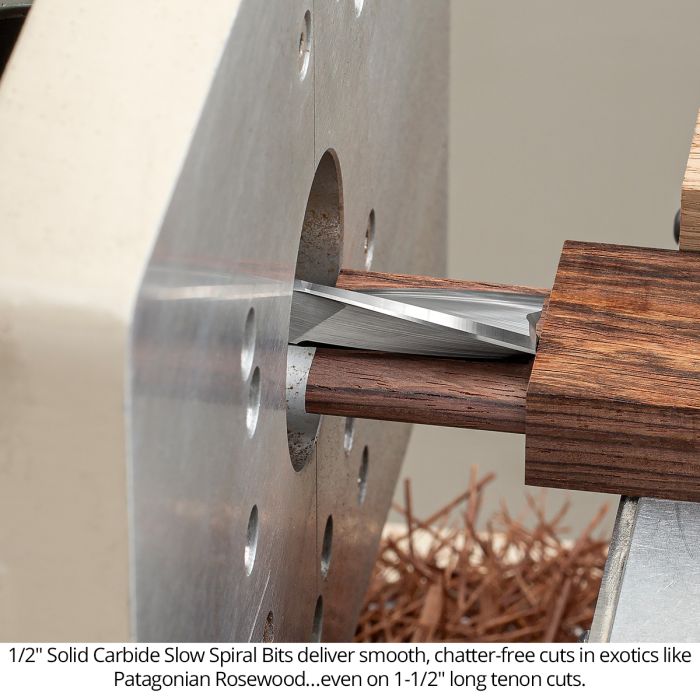
Mortising is another area where spiral tools excel. A spiral mortising router bit allows chips to escape efficiently from deep slots, producing cleaner walls and more accurate joints.
Many shops prefer a spiral mortising router bit set, which includes multiple sizes to handle different mortise widths and depths without switching tool families.
A spiral bit for router table work provides smoother feeding and better surface control compared with straight bits. This is especially important when:
Working with visible edges
Handling thin or laminated materials
Feeding stock manually
Spiral tools reduce vibration and chatter, making router table operations safer and more consistent.
For decorative shaping and contouring, a carving spiral router bit helps achieve smoother curves and cleaner profiles. These tools are commonly used in:
Sign making
Furniture detailing
Artistic woodworking
CNC carving projects
The spiral edge ensures a cleaner cut along curved toolpaths.
Choosing the right size is critical for performance. Below is a practical reference table.
| Size | Typical Use |
|---|---|
| 5mm spiral router bit | Engraving, fine detail work |
| 8mm spiral router bit | Light trimming, profiling |
| 12mm spiral router bit | General CNC routing |
| 20mm spiral router bit | Heavy cuts, large panels |
| 1/8 spiral router bit | Detail routing, small slots |
| 3/8 spiral router bit | Standard trimming & slots |
| 1/2 spiral router bit | Production routing |
| 3/4 spiral router bit | High material removal |
| 2 inch spiral router bit | Large-scale profiling |
Tools are available individually or as part of a spiral router bit set, allowing flexibility across different routing tasks.
Spiral router bits are commonly used on:
Solid wood
MDF & plywood
Plastics & acrylic
Aluminum & non-ferrous metals
The spiral geometry helps prevent melting, burning, and edge tearing across these materials.
For anyone asking what is spiral router bit used for, the answer is simple: spiral router bits are one of the most versatile routing tools available today.
Their ability to handle trimming, plunge cutting, mortising, carving, and production routing—combined with better surface finish and chip control—makes them the preferred choice for CNC shops and professional woodworkers alike.
By selecting the correct spiral router bit type and size, users can improve productivity, extend tool life, and achieve more consistent routing results.
Built for durability and precision, our carbide end mills, inserts, and drills are trusted in aerospace, automotive, and mold-making industries.
From spiral bits to specialty cutters, our woodworking tools ensure clean cuts and extended tool life for professionals.
We usually reply your message within 3 bussiness hours.