
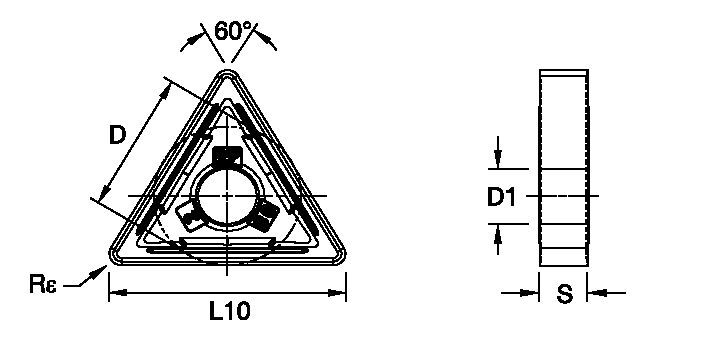
This article breaks down TNMG insert specifications (ISO coding, tolerances, chipbreakers), coating technology, performance factors, and how to read TNMG codes such as TNMG160404-MP-P25.
1. How to Read a TNMG Insert Code
Example: TNMG160408-MP-P25
Meaning:
T = Triangle
N = 0° relief
M = Tolerance
G = Hole + chip groove
16 = Size
04 = Thickness
08 = Corner radius
MP = Chipbreaker
P25 = Grade
2. Coating Technologies for TNMG Inserts
PVD Coatings
Thin, sharp, ideal for stainless steel
TiAlN, AlTiN, TiCN
CVD Coatings
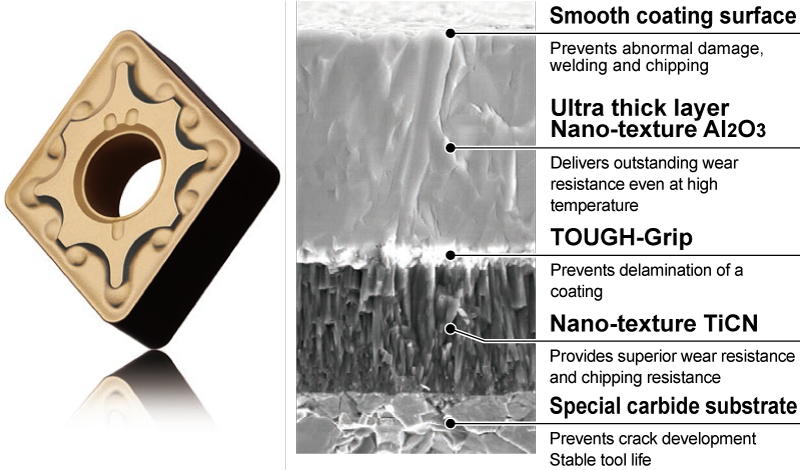
Thicker, more durable
Best for steel and cast iron
Multi-layer structure extends tool life
3. TNMG Grades for Different Materials
| Grade | Material | Feature |
|---|---|---|
| P20–P35 | Steel | Strong cutting edge |
| M20–M30 | Stainless | Anti built-up edge |
| K10–K20 | Cast Iron | High thermal stability |
| CBN | Hardened Steel | Extreme wear resistance |
4. Performance Factors to Consider
1. Cutting Speed
Higher speed for carbide & ceramic, lower for CBN.
2. Feed Rate
Negative inserts like TNMG can handle higher feed due to extra strength.
3. Depth of Cut
TNMG432 > TNMG1604 > TNMG331 (strength ranking)
4. Toolholder Rigidity


Rigid clamping improves surface finish and reduces chatter.
5. TNMG vs Other Turning Insert Types
TNMG vs CNMG
TNMG has 6 edges, CNMG has 4
CNMG stronger for roughing, but TNMG more cost-effective
TNMG vs VNMG
VNMG better for profiling
TNMG stronger and cheaper per edge
TNMG vs WNMG
Both have 6 edges
TNMG stronger edge; WNMG preferred for cast iron
6. When to Choose TNMG Inserts
When tool life matters
When running high chucking forces
When wanting lowest cost per insert
When machining steel or stainless steel in medium/roughing