
If you’ve ever found yourself staring at a pile of spiral router bits—upcut, downcut, compression, flush trim—wondering which one to choose for your CNC or woodworking project, you’re not alone. Choosing the wrong router bit can result in poor surface finish, tear-out, heat buildup, tool breakage, and wasted time. This guide breaks down everything you actually need to know to select the optimal spiral router bit for your project, cutting material, and finish requirements.
This isn’t a marketing pamphlet full of fluff; it’s a practical, engineer’s-lens resource for professionals, shop owners, and serious hobbyists alike.
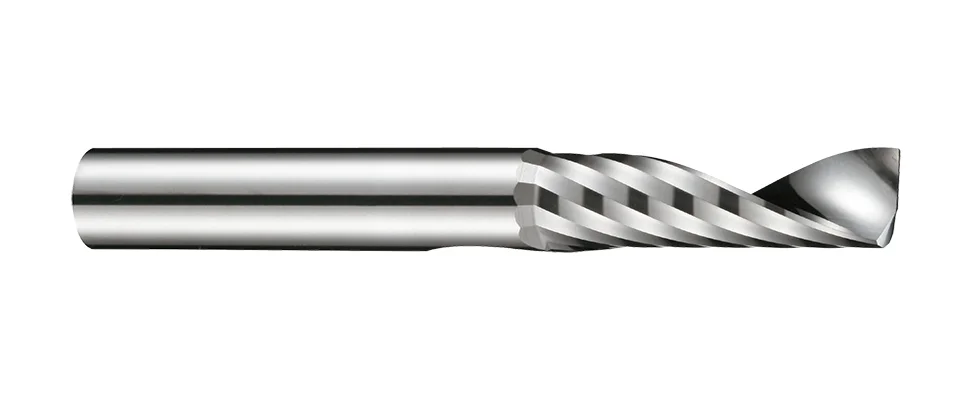
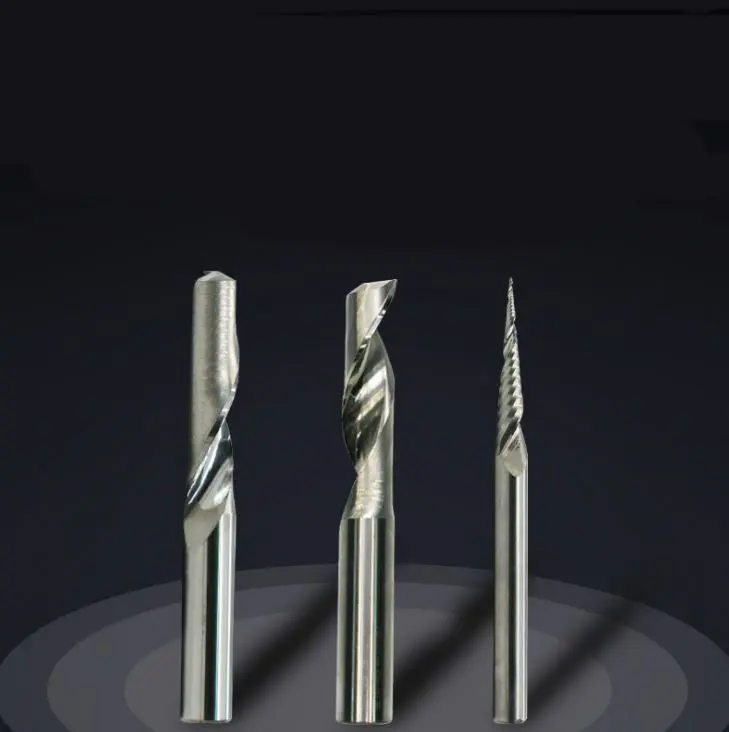
A spiral router bit is a cutting tool used in routers and CNC machines to remove material and create grooves, slots, dados, edge profiles, plunge cuts, and more. Unlike straight bits that “chop” the material, spiral bits use helical flutes that slice into the material, which provides smoother cuts and more efficient chip removal.
A sharp bit with the wrong chip direction will still fail.
Upcut bits remove chips efficiently and run cooler
Downcut bits protect the surface but trap heat
Flush trim bits rely on stability, not aggression
If you’ve ever burned wood with a “sharp” downcut bit, the problem wasn’t sharpness—it was chip evacuation.
Spiral bits cut material using flutes arranged in a helix. The direction of this helix determines chip flow and surface quality:
| Feature | Spiral Bit |
|---|---|
| Cutting Action | Slice rather than chop |
| Chip Removal | Through flutes upward or downward |
| Plunge Capability | Yes (better than straight bits) |
| Finish Quality | Better than straight bits in most cases |
| Material Compatibility | Wood, plastics, composites |
| Type | Flute Direction | Chip Flow | Best Use |
|---|
| Upcut Spiral Router Bit | Flutes rise upward | Pulls chips out of cut | Deep cuts, efficient chip removal |
| Downcut Spiral Router Bit | Flutes spiral down | Pushes chips down into material | Clean top surface |
| Compression Bit | Up at tip + Down near shank | Balanced chip control | Clean both surfaces |
| Flush Trim Spiral Bit | Bearing guided | Controlled | Template trimming |
Upcut bits pull chips upward and out of the kerf, which helps fast feed rates and efficient chip evacuation. They leave a smooth bottom surface but can cause tear-out on the top surface.
Downcut bits push chips downward, causing a cleaner top surface but slower chip removal and potential heat buildup if feed rate is too high.
Compression bits combine both actions: upcut at the tip for bottom finish, downcut above for top finish, ideal for plywood and laminated boards where both faces matter.
Flush trim bits use a guide bearing to follow templates with precision. They aren’t about chip control but about accuracy.
Table 1 below clearly shows real-world scenarios where each bit type excels or fails.
| Application | Best Bit Type | Notes |
|---|---|---|
| Deep groove or slow feed roughing | Upcut | Great chip removal |
| Visible top surface slot/edge | Downcut | Prevents tear-out |
| Both faces visible (plywood) | Compression | Best finish both sides |
| Template routing | Flush trim | Follow pattern precisely |
| Plunge cut | Upcut / Compression | Better chip evacuation |
💡 Tip: If the surface finish matters more than speed, prefer downcut or compression bits. If you need fast material removal, choose upcut.
To help you make decisions, here’s a head-to-head comparison.
| Criteria | Upcut | Downcut |
|---|---|---|
| Chip evacuation | Excellent | Moderate |
| Top finish | Rougher | Cleaner |
| Bottom finish | Cleaner | Rougher |
| Heat buildup | Lower | Higher |
| Feed rate | Faster | Slower |
Hardwood deep pocketing: Upcut is often better due to faster chip removal and less heat buildup.
Sheet goods and veneers: Downcut prevents splintering on visible surfaces.
Mixed laminate plywood: Compression bits deliver the cleanest result on both surfaces.
| Bit Size | Typical Application |
|---|---|
| 1/8″ | Fine detail & engraving |
| 1/4″ | General woodworking |
| 3/8″ | Medium slots & grooves |
| 1/2″ | Deep cuts, heavy routing |
| 3/4″ | Specialized deep roughing |
👉 Longer bits allow deeper cuts but are less stiff and can cause vibration. For precision work, shorter bits usually perform better.
Wood (hardwood & softwood): Upcut or compression depending on finish needs.
Plywood & laminates: Compression bits to avoid tear-out.
Plastics & composites: Upcut bits often perform well for chip removal; compression if surface finish is critical.
Flush trim spiral router bits use a bearing to follow a pattern or template. They are indispensable when:
✔ Matching edges to jigs
✔ Consistent thickness panels
✔ Repeatable production runs
| Feature | Supported |
|---|---|
| Template accuracy | High |
| Surface finish | Dependent on spiral type |
| Ease of use | Easy with proper guide |
| Worst case | Bearing wear causes poor tracking |
👉 Always inspect the bearing for wear and keep it lubricated for best results.
| Task | Feed Rate | Depth per Pass | Notes |
|---|---|---|---|
| Hardwood cutting | Medium | Shallow passes | Prevent chip loading |
| Sheet goods | Slow | Moderate | Prevent tear-out |
| Deep plunge | Slow | Very shallow | Control heat |
| High density board | Slow | Shallow | Avoid burning |
💡 General rule: Slow and steady usually wins. Faster is good only when chip evacuation and cooling are managed well.
Regular maintenance increases life dramatically:
Keep flutes clean
Inspect for chipping
Don’t smash into clamps
Clean resin buildup often
Table 6 – Maintenance Checklist
| Task | Frequency |
|---|---|
| Inspect flutes | Before each job |
| Clean resin/dust | Daily |
| Check bearings | Weekly |
| Replace dull bits | Immediately |
Q1: Can I use a single bit for all cuts?
Not effectively. Each type has strengths and weaknesses; compression is closest but not best for deep pockets.
Q2: Why does my downcut bit burn wood?
Because chips are pushed down, causing heat buildup—slow feed and shallow passes help.
Q3: Are bigger bits always better?
No—too big can cause vibration and poor finish if machine rigidity is low.
Choosing the right spiral router bit isn’t guesswork—it’s understanding material behavior, chip flow, feed strategy, and finish requirements. Whether you’re milling plywood for cabinetry or cutting deep hardwood profiles on a CNC, the right bit choice makes the job faster, cleaner, and more profitable.
Want this article formatted for WordPress with images and caption placeholders?
Or need 2 more blogs with similar depth and unique angles?
Just tell me!
Built for durability and precision, our carbide end mills, inserts, and drills are trusted in aerospace, automotive, and mold-making industries.
From spiral bits to specialty cutters, our woodworking tools ensure clean cuts and extended tool life for professionals.
We usually reply your message within 3 bussiness hours.