
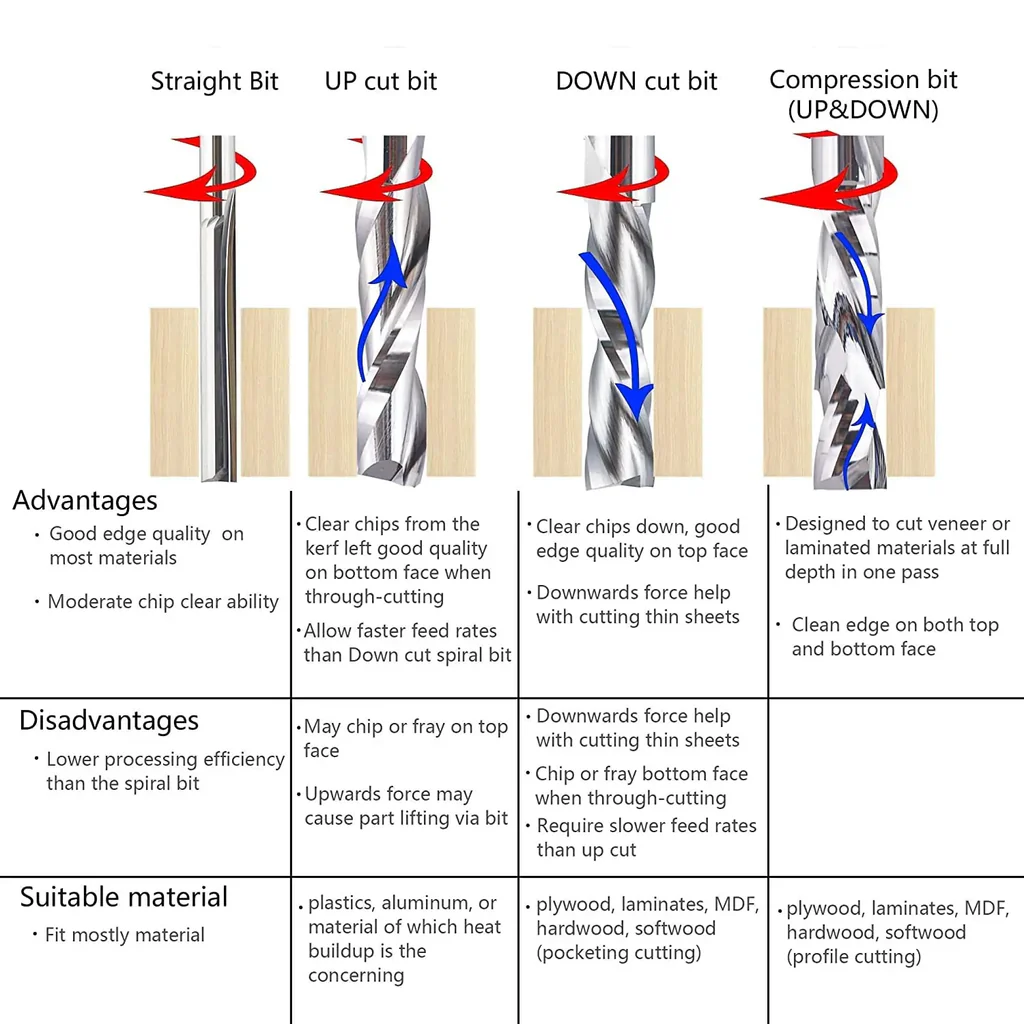
Choosing the right router bit has a direct impact on cutting quality, efficiency, and tool life. One of the most common questions among CNC operators, woodworking professionals, and production shops is router bit straight vs spiral. While both designs are widely used, their cutting behavior and performance characteristics differ significantly—especially in demanding routing applications.
In this article, we’ll explore the key differences between spiral router bit and straight router bit designs, explain how each tool handles chip evacuation and surface finish, and help you decide which option is best for your routing tasks.
What Is a Spiral Router Bit?
A spiral router bit uses a helical cutting edge that wraps around the tool body. Unlike straight-flute tools, the cutting action follows a spiral path, continuously guiding chips away from the cutting zone.
This spiral geometry improves chip flow and reduces heat buildup, making spiral bits especially suitable for CNC routing, deeper passes, and continuous cutting operations. Spiral router bits are commonly selected for applications where surface quality and cutting stability are critical.
Typical spiral router bit uses include:
CNC routing and profiling
Template and pattern routing
Trimming and edge finishing
Slotting and plunge cutting
Mortising and pocket routing
What Is a Straight Router Bit?
A straight router bit features straight cutting flutes running parallel to the tool axis. These tools have been used for decades and remain common due to their simple design and lower cost.
Straight bits perform adequately in shallow cuts and basic trimming tasks. However, because chips are not actively lifted or pressed away, straight router bits can struggle with chip congestion, especially in deep grooves or continuous routing.
Straight router bits are often used for:
Light trimming
Shallow grooves
Simple woodworking tasks
Occasional manual routing
Router Bit Straight vs Spiral: Key Differences
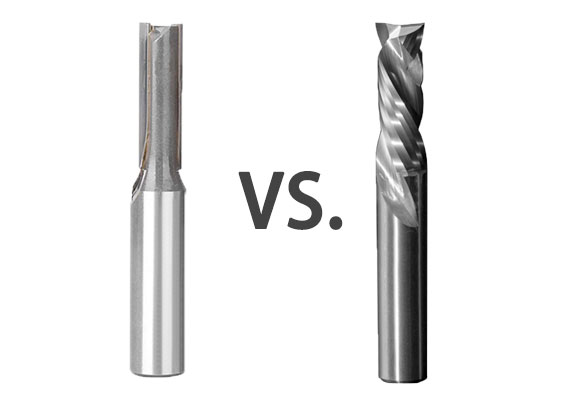
Understanding the difference between straight vs spiral router bit designs helps explain why spiral tools are increasingly preferred in modern CNC and production environments.
1. Chip Evacuation
Spiral router bits guide chips upward or downward along the helix, preventing chip buildup. Straight bits rely on gravity and airflow, which can cause chips to remain in the cut.
2. Surface Finish
Because spiral bits cut progressively along the helix, they produce smoother edges and cleaner surfaces. Straight bits often leave tool marks, especially in plywood, MDF, and plastics.
3. Heat Control
Better chip evacuation means less friction and lower cutting temperature. Spiral designs reduce burning, melting, and material adhesion.
4. Cutting Stability
Spiral tools provide more consistent cutting forces, resulting in reduced vibration and improved control—especially during long production runs.
Comparison Table: Spiral Router Bit vs Straight Router Bit
| Feature | Spiral Router Bit | Straight Router Bit |
|---|---|---|
| Chip evacuation | Excellent, controlled chip flow | Limited, chips remain in cut |
| Surface finish | Smooth, clean edges | Rougher finish possible |
| Heat buildup | Low | Higher risk |
| Cutting stability | High | Moderate |
| CNC routing suitability | Excellent | Limited |
| Deep cutting performance | Strong | Weak |
| Typical applications | CNC routing, trimming, plunging | Light trimming, shallow cuts |
Spiral Router Bit Types for Different Applications
Spiral router bits are available in several configurations to match specific routing tasks:
Spiral Trim Router Bit
Used for edge trimming and finishing, offering clean cuts along material edges.
Spiral Flush Router Bit
Ideal for template routing and laminate trimming where accuracy is critical.
Spiral Plunge Router Bit
Designed for controlled vertical entry, making it suitable for slotting and pocket creation.
Spiral Mortising Router Bit
Used for mortising and joinery operations, often supplied as a spiral mortising router bit set to cover multiple sizes.
Using Spiral Router Bits on Router Tables and CNC Machines
A spiral bit for router table use provides smoother feeding and improved edge quality compared with straight bits. On CNC routers, spiral tools are preferred due to their ability to handle higher feed rates and longer cutting cycles.
For deep cuts or thicker materials, a long spiral router bit allows extended reach without sacrificing cutting stability. Decorative and contour work may benefit from a carving spiral router bit designed for smooth transitions and detailed profiling.
Spiral Router Bit Sizes: Metric and Inch Options
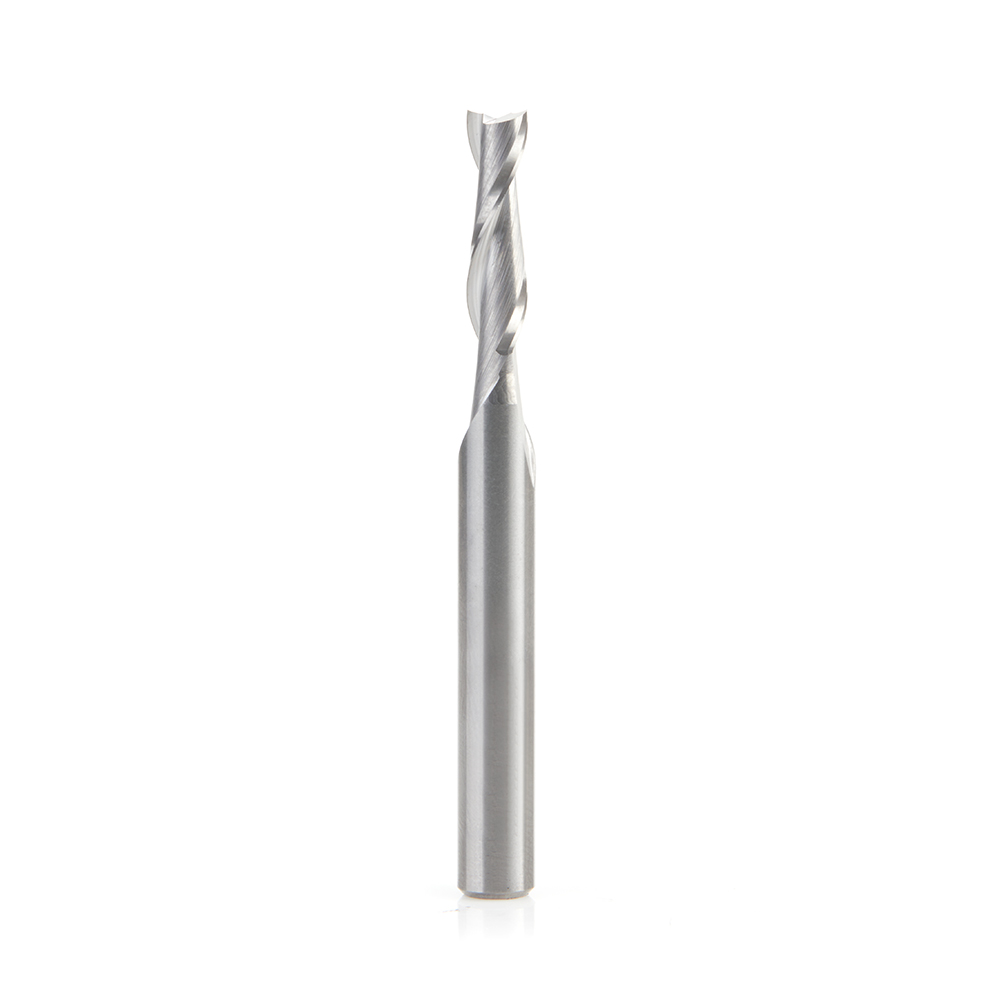
Common size options include:
Metric: 5mm spiral router bit, 8mm spiral router bit, 12mm spiral router bit, 20mm spiral router bit
Inch: 1/8 spiral router bit, 3/16 spiral router bit, 3/8 spiral router bit, 1/2 spiral router bit, 3/4 spiral router bit, 2 inch spiral router bit
Tools can be purchased individually or as part of a spiral router bit set, giving shops flexibility across multiple routing operations.
What Is a Spiral Router Bit Used For?
For users asking what is spiral router bit used for, common applications include:
Trimming and edge finishing
Template and pattern routing
Plunge cutting and slotting
Mortising and pocket routing
Engraving and profiling
Materials typically include wood, MDF, plywood, plastics, acrylic, and non-ferrous metals.
Final Thoughts: Straight vs Spiral Router Bit—Which Should You Choose?
For light, occasional work, straight router bits may still be sufficient. However, for CNC routing, production machining, and applications where surface finish and consistency matter, spiral router bits offer clear advantages.
By understanding router bit straight vs spiral differences and selecting the correct spiral router bit type and size, shops can achieve better cutting performance, longer tool life, and more reliable results.