
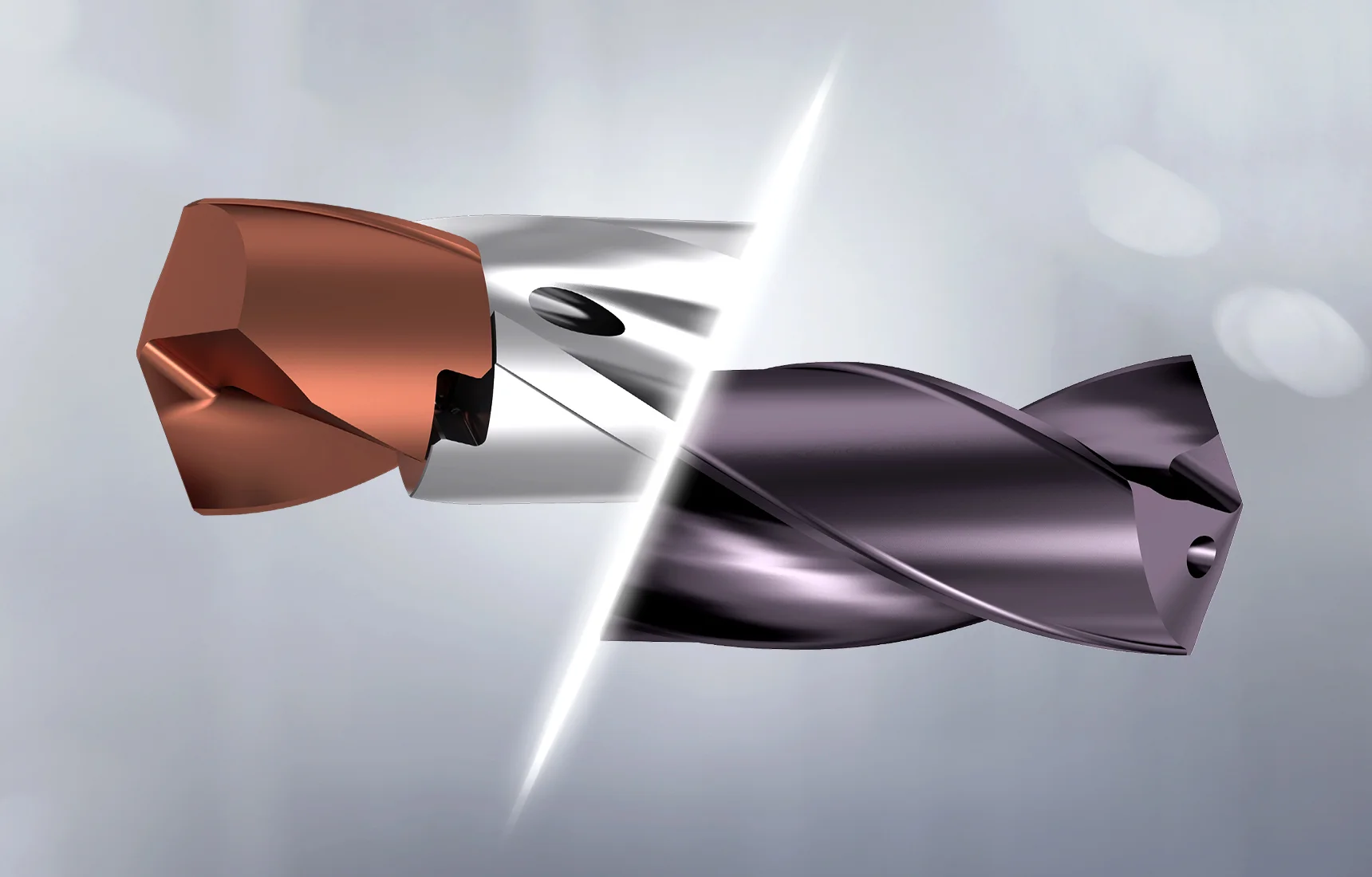
In today’s fast-paced construction, manufacturing, and maintenance environments, tool efficiency directly affects productivity and cost. One of the most practical innovations reshaping drilling and fastening work is the modular drill system. By allowing users to switch between multiple drilling and driving functions using interchangeable modules, a modular drill delivers flexibility that traditional fixed-head drills cannot match.
From compact home tools like the Black and Decker modular drill to professional solutions such as the Stanley modular drill and driver set, and even industrial platforms like the Jiffy modular drill system and Kennametal modular drill, modular drill technology is now widely adopted across many industries.
This article takes a deeper look at how modular drill systems perform in real applications, how different modular drill bits and attachments affect efficiency, and how buyers can select the most suitable modular drill setup.
How Modular Drill Systems Improve Performance
Unlike conventional drills, a modular drill system is designed around adaptability. The core motor unit remains the same, while the working head changes depending on the task.
Key performance advantages
Faster tool changes without stopping work
Reduced downtime between drilling and driving
Improved access in tight or restricted spaces
Lower long-term tool investment
More consistent torque and alignment
For installers, electricians, and fabricators, these advantages translate into faster project completion and reduced tool fatigue.
2. Core Components of a Modular Drill System
A typical modular drill setup consists of the following elements:
Modular drill body (power unit)
Modular drill bit system
Driver module
Impact or torque module
Extension adapters
Right-angle attachments
Offset attachments
One of the most widely used accessories is the Dewalt modular right angle drill attachment, which allows drilling and fastening in areas where straight drills cannot fit.
3. Modular Drill Bits: Design and Function
A modular drill bit differs from a standard drill bit by using a quick-change interface instead of a traditional chuck. This improves speed, consistency, and safety.
Common modular drill bit types
HSS modular drill bits
Carbide-tipped modular drill bits
Multi-purpose modular drill bits
Step modular drill bits
Countersink modular drill bits
Benefits of modular drill bits
Faster bit replacement
Reduced runout
Improved drilling accuracy
Better torque transfer
Longer tool life
Modular Drill Bit Selection by Material
| Material | Recommended Modular Drill Bit | Key Advantage |
|---|---|---|
| Wood | HSS or brad-point modular bit | Clean entry and exit |
| Aluminum | Multi-purpose modular bit | Smooth chip removal |
| Mild Steel | Carbide-tipped modular bit | Heat resistance |
| Stainless Steel | High-torque carbide modular bit | Long tool life |
| Plastic | Step modular drill bit | Prevents cracking |
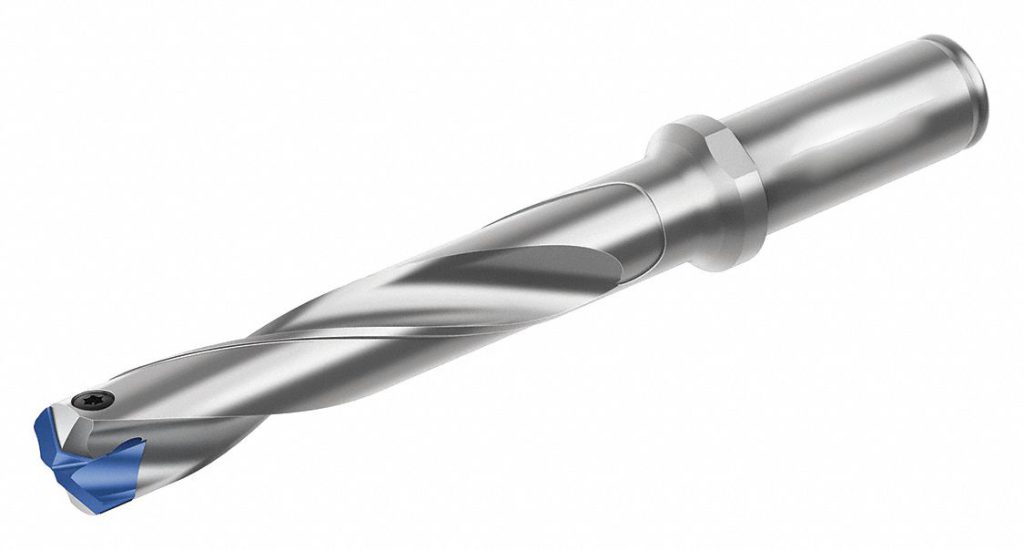
5. Right-Angle Attachments: Solving Space Constraints
One of the strongest reasons users choose a modular drill system is its ability to work in confined spaces.
Popular Dewalt Modular Attachments
Dewalt modular flextorq right angle drill attachment
Dewalt modular right angle drill attachment
Dewalt 2-in-1 modular right angle drill attachment
These attachments are widely used in:
Cabinet installation
HVAC systems
Automotive repair
Electrical panel work
Furniture assembly
They maintain strong torque while providing excellent maneuverability.
6. Comparing Modular Drill Brands
Different brands focus on different application levels:
Black and Decker modular drill – ideal for home DIY users
Craftsman modular drill – balanced performance for DIY and light professional use
Stanley modular drill and driver set – complete multi-function kits
Montana modular drill and drive set – strong motor for workshop tasks
Jiffy modular drill system – heavy-duty industrial drilling
Kennametal modular drill – precision CNC machining
Modular Drill Brand Comparison
| Brand / System | Best For | Key Feature |
|---|---|---|
| Black and Decker | Home DIY | Lightweight & affordable |
| Craftsman | DIY & trade | Good torque |
| Stanley | Professional | Full modular kit |
| Montana | Workshop | Strong power |
| Jiffy | Industrial | High rigidity |
| Kennametal | CNC machining | Precision & stability |
8. Applications Across Industries
Construction & renovation – fast tool changes reduce downtime
Electrical & HVAC – right-angle modules solve space constraints
Automotive repair – modular access improves efficiency
Manufacturing & CNC – industrial modular drills ensure accuracy
Home improvement – compact modular drills simplify daily tasks
9. How to Choose the Right Modular Drill
When selecting a modular drill system, consider:
Your main application (DIY, professional, or industrial)
Compatibility within one brand ecosystem
Torque and speed requirements
Included attachments and modular drill bits
Future expansion options
10. Conclusion
A modular drill system offers an efficient, flexible, and cost-effective solution for modern drilling and driving tasks. Whether you are using a Craftsman modular drill for daily work, a Stanley modular drill and driver set on job sites, or an industrial Kennametal modular drill in CNC machining, modular technology provides clear advantages over traditional tools.
By combining modular drill bits, right-angle attachments, and interchangeable modules, users can complete more tasks with fewer tools—saving time, space, and cost.