
Once you understand the code, the next challenge is choosing the correct TNMG inserts for your material and machining conditions. The wrong grade or chipbreaker can lead to poor surface finish, built-up edge or fast wear.
In this article we’ll look at how to match TNMG insert grade and geometry to steel, stainless steel, cast iron and aluminium, and when to consider TNMG CBN insert or TNMG ceramic inserts for hardened materials.
1. Matching TNMG inserts to steel
Most shops use TNMG inserts mainly on carbon steel and alloy steel. Modern carbide grades combine a tough substrate with a CVD or PVD coating to handle a wide range of cutting conditions.
For general-purpose steel turning:
Choose a medium-geometry chipbreaker labelled for “P-steel”
Start with a small nose radius (0.4–0.8 mm) for finishing, larger for roughing
Use a neutral or slightly negative rake insert TNMG in a sturdy holder
Common choices are TNMG 1604 carbide inserts for light to medium cuts, or TNMG 2204 insert when you need more strength and depth of cut.
2. Stainless steel – avoid built-up edge
Stainless steels (austenitic, martensitic and PH grades) are tougher and tend to work-harden, so you need a sharper cutting edge and a coating that resists adhesion.
Manufacturers like Kennametal and Tungaloy recommend dedicated stainless grades with balanced toughness and wear resistance for their TNMG inserts.
Tips for stainless:
Select a PVD-coated or sharp-edge chipbreaker
Use enough feed rate to cut under the work-hardened layer
Avoid rubbing with too small depth of cut
A low price carbide TNMG insert designed only for steel may struggle in stainless, so check the TNMG insert specification carefully.
3. Cast iron – stable and productive
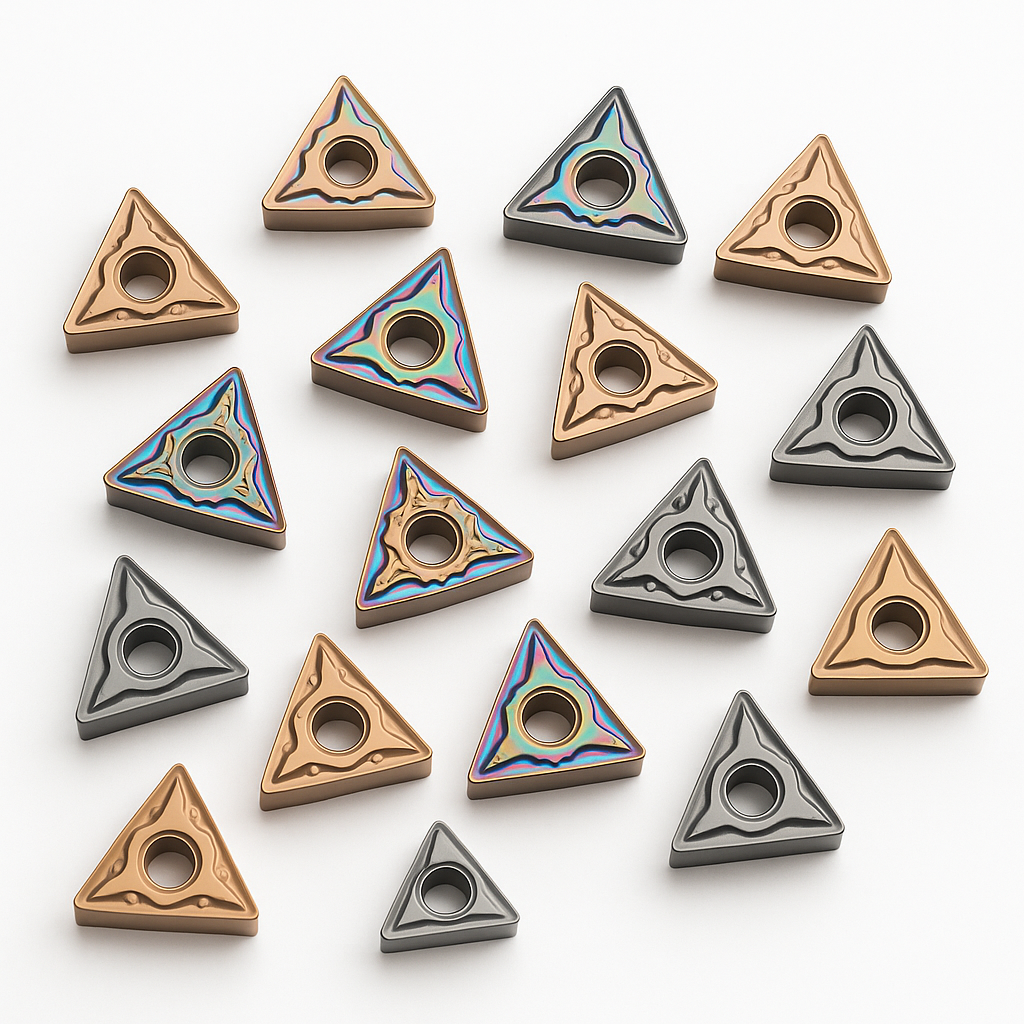
For grey and ductile cast iron, a negative triangular insert is a great choice. The material is abrasive, so you need a wear-resistant carbide with a tough CVD coating.
When selecting a TNMG 1608 insert cast iron grade:
Choose a chipbreaker for medium to heavy roughing
Use higher cutting speeds; cast iron usually allows fast machining
Ensure the holder and bar are rigid for vibration-free cuts
Because of the six cutting edges, a cheap carbide TNMG insert can still provide excellent tool life in cast iron applications.
4. Non-ferrous materials and aluminium
Standard coated inserts are not ideal for aluminium because the coating can react with the soft metal and cause built-up edge. For TNMG insert for aluminium machining or non-ferrous metals:
Select an uncoated polished carbide with sharp edge
Use higher cutting speeds and generous coolant or air blast
Choose a small nose radius for fine finishing
If you machine aerospace aluminium or copper alloys regularly, it is better to keep a dedicated tnmg insert for aluminium on the shelf instead of trying to run steel grades.
5. Hardened steel – when to use CBN or ceramic TNMG inserts
Above about 50–55 HRC, normal carbide inserts wear too quickly. Here, TNMG CBN insert and TNMG ceramic inserts become powerful options.
CBN TNMG: best for hardened tool steel, bearing steel and chilled iron
Ceramic TNMG: suitable for high-speed turning of cast iron and some superalloys
These advanced inserts are more expensive, but they can replace grinding operations and dramatically reduce cycle time.
6. Choosing the correct insert holder and nose radius
Even the best insert fails in the wrong holder. When choosing a TNMG insert holder:
Match the seat angle and clamping system to the insert
Ensure sufficient overhang stiffness for boring bars
For anti-vibration bars, follow the manufacturer’s recommended TNMG style
Nose radius affects both surface finish and cutting forces:
Small radius (0.2–0.4 mm): lower cutting forces; ideal for thin or flexible parts
Medium radius (0.4–0.8 mm): general-purpose finishing and medium cuts
Large radius (1.2 mm and above): strong edge for roughing, but needs rigid setup
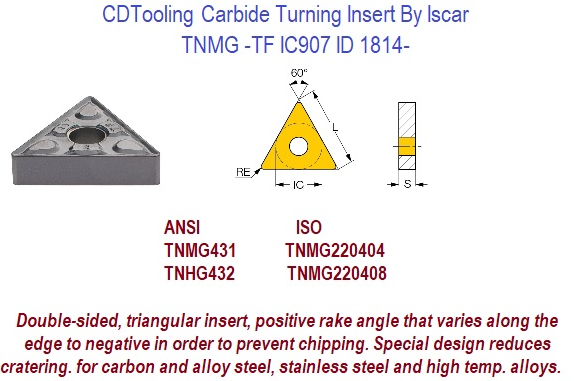
Learning how to measure inscribed circle of TNMG insert and thickness using calipers helps you confirm compatibility between inserts and holders when you mix brands.
7. Summary
Selecting tnmg turning inserts is not just about grabbing any triangular insert off the shelf. By considering material group, hardness, machine rigidity and finish requirements, you can pick the right TNMG insert sizes, chipbreakers and grades:
P-grades for steel
M-grades for stainless
K-grades for cast iron
Special polished or uncoated grades for aluminium
CBN and ceramic for hard turning
With the correct combination, your inserts will last longer, your cycle times will drop and your parts will meet tight tolerances and surface finish requirements every time.