
In modern CNC machining, the competition for higher precision, longer tool life, and faster cutting speeds never stops. While many engineers and machinists are familiar with carbide cutting tools, few truly understand the science and craftsmanship behind ceramic cutting tools—the quiet powerhouse that’s revolutionizing high-speed machining.
This article takes you inside the fascinating world of ceramic tool production—step by step—revealing how these ultra-hard tools are created, and why they’re becoming a top choice for high-efficiency machining.
1. The Rise of Ceramic Cutting Tools
Ceramic tools are not new, but they’ve evolved rapidly with modern manufacturing needs. Unlike carbide or steel tools, ceramic cutting tools are made primarily from aluminum oxide (Al₂O₃), silicon nitride (Si₃N₄), or zirconia (ZrO₂). These materials are sintered at extremely high temperatures to form tools that can withstand intense heat and speed.
Why Are They Popular?
Excellent heat resistance (operate over 1000°C)
High hardness and wear resistance
Outstanding performance in cast iron, hardened steel, and nickel alloys
Environmentally friendly — often used without cutting fluids
Ceramic inserts are especially valued in industries like aerospace, automotive, and energy, where high-speed and hard-material machining are essential.
2. The Manufacturing Process of Ceramic Cutting Tools
The creation of a ceramic insert involves precision chemistry, advanced engineering, and careful control of temperature and pressure. Let’s break it down into key stages.
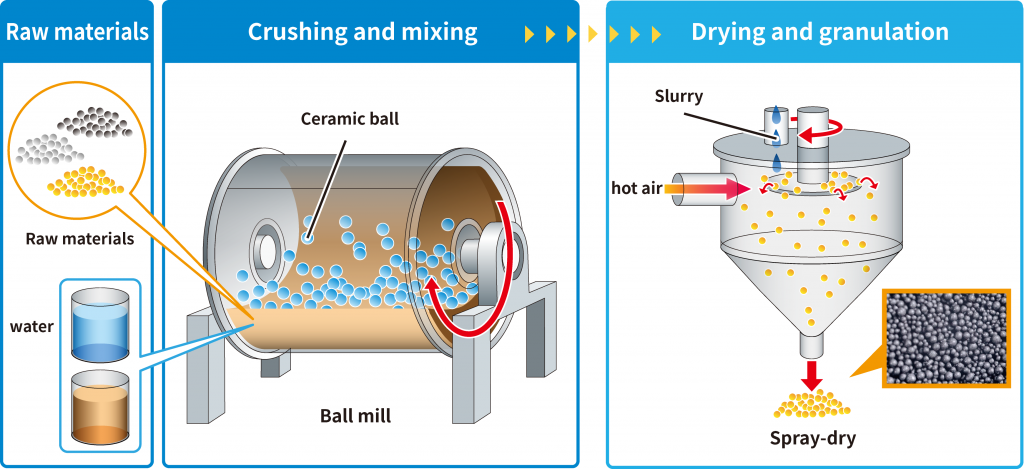
Step 1: Mixing and Milling
The journey begins with the powder preparation.
Fine ceramic powders (aluminum oxide or silicon nitride) are combined with additives like binders and lubricants.
Two key sub-steps:
Wet Milling and Homogenizing:
The powder is mixed in a ball mill with water to achieve a uniform particle size. This ensures each grain has the same density and chemical composition.
Drying and Granulating:
The mixture is spray-dried with hot air, turning the fine slurry into small spherical granules.
These granules flow easily into molds during the next stage.
👉 Precision at this stage determines the strength and consistency of the final tool.
Step 2: Press Forming
Once the powder is ready, it’s compacted into the shape of a tool insert using a hydraulic or isostatic press.
The pressure used can reach 1–2 tons per square centimeter — imagine the weight of a full-grown hippopotamus pressing on your fingertip!
This step gives the ceramic insert its preliminary form, though it’s still fragile—like chalk before firing.
To avoid cracking, each material requires customized pressure curves and dwell times.
Step 3: Sintering – The Heart of the Process
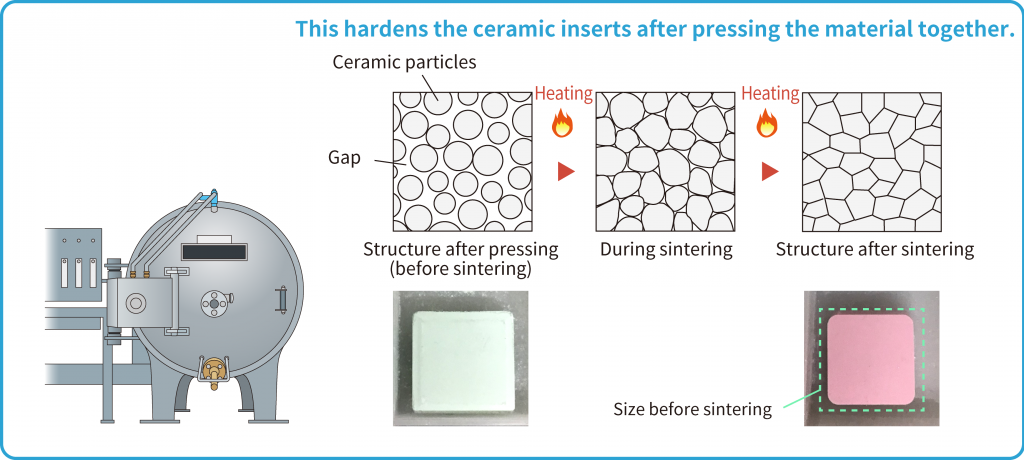
This is the most critical stage in ceramic tool production.
The pressed “green” inserts are placed in a sintering furnace where temperatures reach up to 1700°C.
Under this extreme heat:
The ceramic particles bond and densify, eliminating internal pores.
The insert becomes hard and solid with a density close to 100% theoretical.
Chemical reactions between components form complex crystalline structures that define tool performance.
The sintering process transforms the fragile green compact into a super-hard, heat-resistant tool capable of cutting at speeds carbide could never reach.
Step 4: Grinding and Polishing
After sintering, each insert undergoes precision grinding to achieve the exact shape, tolerance, and edge radius.
This includes:
Top and bottom surface grinding
Outer diameter and edge rounding
Dimensional consistency control
Polishing minimizes micro-defects and ensures stable cutting.
Even small inconsistencies can cause chipping during high-speed cutting, so this step is vital for consistent tool quality.
Step 5: Coating (Optional but Powerful)
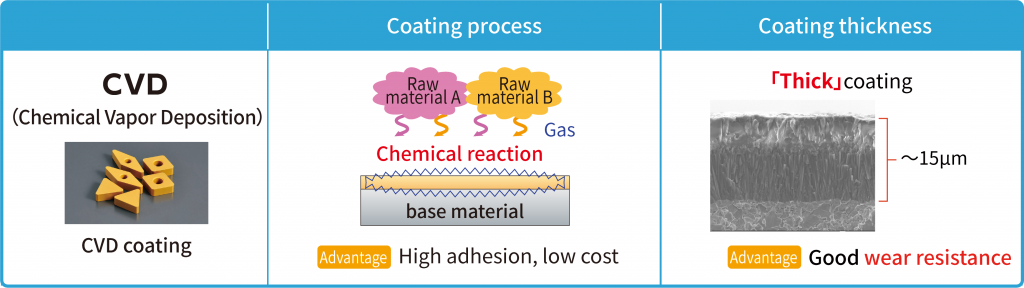
Although many ceramic tools are used uncoated, CVD (Chemical Vapor Deposition) coatings can significantly boost performance, especially in high-temperature environments like cast iron or Inconel machining.
Coatings such as:
Al₂O₃ (alumina) – for oxidation resistance
TiN / TiAlN – for wear resistance
ZrO₂-based layers – for toughness
These coatings help suppress flank wear, control diffusion, and extend tool life by up to 50–100% in demanding cutting conditions.
3. Ceramic vs Carbide Tools: What’s the Difference?
To help you visualize the performance contrast, here’s a simple comparison between ceramic and carbide tools:
Feature | Ceramic Cutting Tools | Carbide Cutting Tools |
Material Composition | Aluminum oxide, silicon nitride | Tungsten carbide + cobalt binder |
Hardness (HRA) | 93–97 | 89–92 |
Maximum Cutting Temperature | Up to 1200°C | Up to 800°C |
Cutting Speed | 2–5× faster than carbide | Standard speed |
Toughness | Moderate | High |
Ideal Applications | Cast iron, hardened steel, nickel alloys | Steel, stainless steel, nonferrous metals |
Cost Efficiency | Higher initial cost, but longer life | Lower cost, more frequent replacement |
From the table, it’s clear that ceramic tools shine in high-speed finishing and dry machining, while carbide tools remain the go-to for general-purpose applications.
However, as manufacturers pursue shorter cycle times and higher productivity, ceramic tools are increasingly seen as a premium investment for long-term cost savings.
4. Applications Across Industries
Ceramic cutting tools are no longer niche. They’re transforming operations in multiple sectors:
Aerospace
Machining nickel-based superalloys like Inconel or Rene alloys for turbine blades requires extreme heat resistance — ceramic tools excel here.
Automotive
Perfect for cast iron engine blocks, brake components, and high-speed finishing of crankshafts and pistons.
Energy and Power Generation
Used for heat-resistant steel and hard coating alloys found in turbine and valve components.
General Engineering
Ideal for dry machining and mass production, where minimizing tool changes improves productivity.
5. Quality Control in Every Stage
Precision doesn’t end with production. Every batch of ceramic inserts undergoes rigorous quality testing:
Microscopic structure analysis (to check for cracks and voids)
Dimensional inspection using laser measurement
Performance cutting tests under controlled parameters
Only inserts meeting the strictest standards are packaged for distribution.
6. Why Choose Ceramic Tools from Huana?
At Huana Tools, we combine advanced ceramic powder technology with precision engineering to deliver cutting tools that stand out in both durability and performance.
Our Ceramic Tools Offer:
✅ High cutting speed capability for productivity boost
✅ Superior wear resistance for longer tool life
✅ Excellent thermal stability for dry machining
✅ Reliable consistency from batch to batch
We use high-purity raw materials and precision CVD coatings, ensuring that every ceramic insert meets global machining standards for automotive, aerospace, and heavy industry applications.
Whether you’re looking to upgrade your cast iron machining line, improve your high-speed finishing, or explore dry-cutting solutions, Huana Tools provides customized ceramic cutting tool solutions tailored to your needs.
7. Pro Tips for Using Ceramic Tools Effectively
Even the best tool performs best with the right parameters. Here are expert recommendations from Huana’s technical team:
Use high cutting speeds (200–800 m/min depending on material).
Avoid coolant — ceramics perform better dry.
Maintain stable clamping to minimize vibration.
Optimize entry and exit paths to reduce impact on edges.
Monitor flank wear regularly; ceramic inserts typically wear gradually instead of chipping.
8. The Future of Ceramic Machining
As industries shift toward sustainability and high efficiency, ceramic cutting tools represent the next generation of machining innovation. Their ability to handle heat, maintain hardness, and deliver consistent results make them a key enabler of smart, dry, and fast production lines.
9. Conclusion
Ceramic cutting tools combine science, precision, and performance. From powder to polished insert, each step in their creation is optimized for strength and reliability. Compared to traditional carbide tools, ceramics deliver faster speeds, longer tool life, and a significant reduction in machining costs—especially in hard and high-temperature materials.