
Carbon fiber-reinforced polymer (CFRP) and other composites combine extreme strength with low weight. However, they are notoriously difficult to machine. Standard metals-focused tools tend to fray the fibers, overheat the resin, and wear out quickly.
That’s where a diamond coated carbide burr bit carbon fiber comes in. By combining a hard tungsten carbide burr bit base with a diamond coating, these tools provide clean cuts and extended life on abrasive composite materials.
In this article, we’ll explore why you should consider diamond coated carbide burr bit carbon fiber solutions, how to select the right carbide burr bit set for composite work, and how to integrate these tools into your production line.
Why Diamond Coated Carbide Burr Bits Excel on Carbon Fiber
Carbon fiber is highly abrasive. Pure carbide burrs can cut it, but they wear out quickly. Diamond coating changes the game:
Superior wear resistance – Diamond is harder than any metal, so it resists abrasive wear from carbon fibers.
Cooler cutting – The coating helps reduce friction and heat build-up, minimizing resin burning.
Smooth edges – A high-quality diamond coated carbide burr bit carbon fiber produces cleaner hole edges with fewer loose fibers.
Comparing Standard Carbide vs. Diamond Coated Burrs on Carbon Fiber
| Property / Performance Aspect | Standard Tungsten Carbide Burr Bit | Diamond Coated Carbide Burr Bit Carbon Fiber |
|---|---|---|
| Tool Life on Carbon Fiber | Short to medium | Long, often several times longer |
| Edge Quality | Acceptable, may cause fraying | Excellent, minimal delamination |
| Ideal Use | Occasional composite work | Regular or production-scale composite machining |
| Typical Cost | Lower upfront cost | Higher upfront but better cost per part |
| Recommended Materials | Metals, plastics, general usage | Carbon fiber, glass fiber, other abrasive composites |
For production environments, the total cost per workpiece often favors diamond coated carbide burr bit carbon fiber tools, even though the unit price is higher.
Choosing a Carbide Burr Bit Set for Composite Work
When working with composites, you’ll still use common shank sizes like 1/8″ and 1/4 inch carbide burr bit formats. However, you should carefully choose the head shapes and coatings.
A dedicated composite-oriented carbide burr bit set might include:
| Item No. | Burr Type | Coating Type | Typical Use on Carbon Fiber |
|---|---|---|---|
| 1 | Cylinder with radius end carbide burr bit | Diamond | Edge trimming, surface blending |
| 2 | Ball nose diamond coated carbide burr bit | Diamond | Contouring complex shapes |
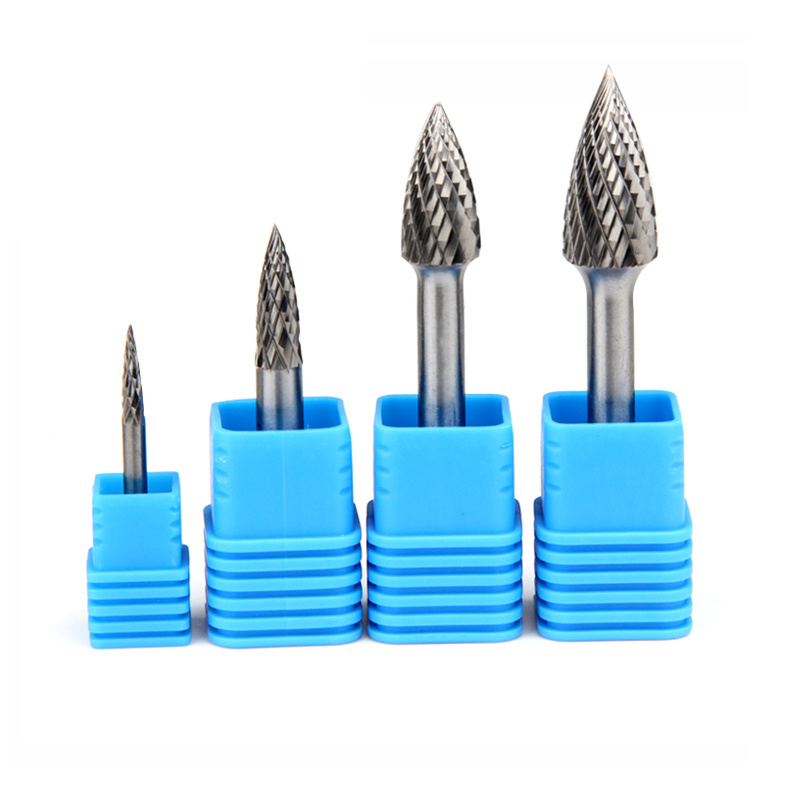
| 3 | Tapered / tree-shape burr | Diamond | Accessing tight corners in composite layups |
| 4 | Oval burr | Diamond | Deburring and chamfering holes |
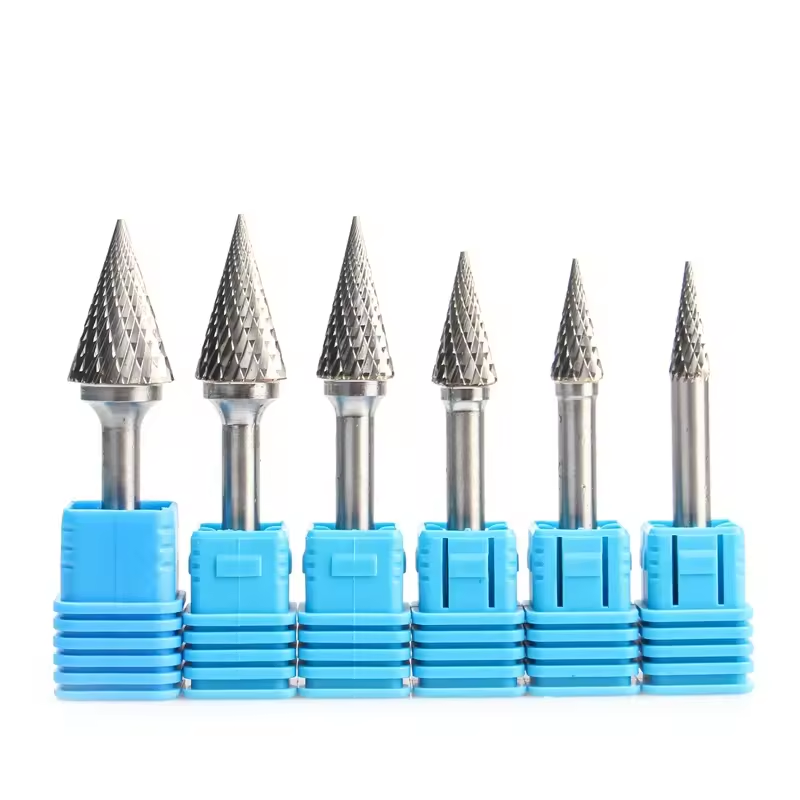
| 5 | Cone carbide burr rotary file bit | Diamond | Countersinking and creating bevels around drilled holes |
This combination allows you to handle nearly every composite deburring or shaping task with a single carbide burr bit set.
Best Practices When Using Diamond Coated Burr Bits on Carbon Fiber
Use the Correct Speed and Feed
Carbon fiber prefers high speed with moderate feed pressure. Too much pressure can crack the laminate; let the diamond coated carbide burr bit carbon fiber do the work.Support the Workpiece
Always support the backside of the laminate to avoid delamination and chipping.Control Dust and Safety
Carbon fiber dust is harmful if inhaled. Use vacuum extraction, wear a respirator, and ensure adequate ventilation. Safety glasses and gloves are also essential.Avoid Excessive Heat
Excess heat can damage the matrix resin. If you notice discoloration or burning, reduce speed or feed and consider using a light air blast for cooling.Handle Tools Carefully
While diamond coatings are extremely hard, they can be brittle. Avoid dropping or striking your diamond coated carbide burr bit carbon fiber tools.
Integrating Carbide Burr Rotary File Bits into Composite Manufacturing
In many factories, composite parts go through several machining stages:
Rough cutting of panels using saws or routers
Precision trimming using diamond coated carbide burr bit carbon fiber tools
Drilling holes for fasteners or inserts
Edge finishing and chamfering using a carbide burr rotary file bit in a die grinder
By specifying diamond-coated burrs at stages 2 and 4, manufacturers gain:
More consistent edge quality
Reduced scrap rates
Shorter tool-change downtime
These improvements are especially valuable in aerospace and automotive applications, where dimensional accuracy and surface integrity are critical.
Conclusion
For manufacturers and workshops regularly machining carbon fiber and other abrasive composites, upgrading to diamond coated carbide burr bit carbon fiber solutions is a powerful step forward. By combining the durability of tungsten carbide with the extreme hardness of diamond, these tools provide cleaner cuts, longer life, and lower overall machining costs.
Equip your line with a well-chosen carbide burr bit set, including 1/4 inch diamond-coated burrs and matching carbide burr rotary file bit shapes, and you’ll be ready to handle high-performance composite materials with confidence and efficiency.