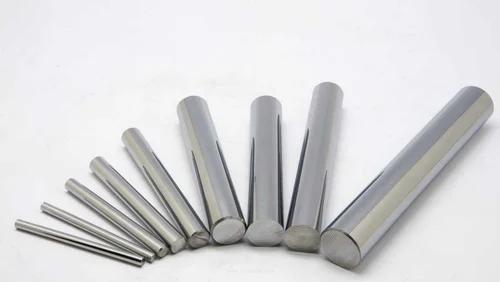


Carbide rods are the backbone of many precision tool industries — from cutting tools and drills to wear-resistant parts and industrial machinery components. In this comprehensive guide, we explain how carbide rods are made, what types and grades exist, how to choose a supplier, and what buyers need to know in 2025 to optimize purchase decisions and production outcomes.
Carbide rods — often made from tungsten carbide — are cylindrical blanks used as raw material to produce high-performance tools and wear parts. Their exceptional hardness, durability, and heat resistance make them indispensable in precision manufacturing and heavy-duty applications.
Carbide rods are most commonly made from tungsten carbide powder with a metallic binder such as cobalt, forming a cemented carbide composite with excellent mechanical properties for industrial use.
| Feature | Tungsten Carbide Rod | Other Common Materials |
|---|---|---|
| Hardness | Very high (top industrial grade) | Moderate (steel, HSS) |
| Wear Resistance | Excellent | Low to moderate |
| Thermal Stability | High | Moderate |
| Toughness | Good (with binder) | Moderate to low |
| Application Scope | High-speed cutting, wear parts | General machining tools |
Carbide rod manufacturing includes several important steps. The most common method is powder metallurgy, followed by pressing and sintering:
Raw Material Mixing
Tungsten carbide powder is mixed with a binder (usually cobalt) to achieve the desired performance.
Pressing / Forming
The mixed powder is shaped into a rod blank using extrusion or pressing methods.
Drying and Binder Removal
The pressed blank is dried to remove binders and prepare for sintering.
Sintering
The blanks are heated at high temperature (≈1500°C+) to form dense, solid carbide rods.
CNC Grinding & Finishing
The rods may be ground, chamfered, or dimensionally finished to meet precise tolerances.
Inspection & Packaging
Quality control ensures straightness, dimensional accuracy, and performance before shipment.
| Rod Type | Description | Typical Use |
|---|---|---|
| Solid Carbide Rod | Full density, no holes | End mills, precision tools |
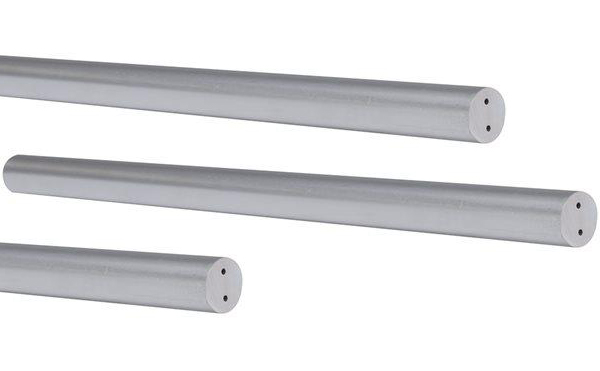
| Coolant Hole Rods | With internal coolant channels | Drills, deep cutting tools |
| Coated Carbide Rods | Enhanced surface coatings | Wear resistance, longer life |
| Specialty Grade Rods | Customized alloys | Aerospace, automotive |
The carbide rod market has grown steadily into 2025 thanks to continued demand in automotive, aerospace, electronics, and industrial machining. Manufacturers are innovating with new grades, coatings, and tight tolerance production to meet high-performance requirements.
Carbide rod suppliers offer a range of products including:
Standard graded rods for general machining
Custom diameter rods
Rods with coolant holes
High-precision, high-grade carbide rods for specialist tools
| Decision Factor | What to Consider | Why It Matters |
|---|---|---|
| Material Grade | Tungsten/Cobalt ratio | Influences hardness & tool life |
| Tolerance Capability | Precision grade availability | Critical for accurate tools |
| Production Capacity | Stock & delivery times | Affects lead time |
| Quality Control | ISO/ASTM certifications | Ensures consistency |
| Technical Support | Engineering consultation | Improve tool design |
✔ Confirm Material Composition: Ensure rods are made from correct carbide grades for your application.
✔ Tolerance & Precision: High-end tools need tight tolerances. Ask for measurement reports or certificates.
✔ Supplier Documentation: Check ISO or ASTM quality standards to ensure reliable production.
✔ Performance Feedback: Real-world reviews and test reports help validate supplier claims.
As manufacturing evolves, the carbide rod market is expected to grow with:
✅ Increased demand for precision tooling in aerospace & EV industries
✅ Expansion of coated rod technologies for enhanced wear performance
✅ Higher demand for specialized grades with superior life and stability
Carbide rods remain foundational in manufacturing high-performance tools and wear components. Understanding how they are made, how to evaluate quality, and how to choose the right supplier is essential in making smart purchasing and manufacturing decisions. Whether you are sourcing rods for end mills, drills, or wear parts — the right carbide rod can dramatically improve performance, reduce production cost, and drive competitiveness in 2025 and beyond.
Built for durability and precision, our carbide end mills, inserts, and drills are trusted in aerospace, automotive, and mold-making industries.
From spiral bits to specialty cutters, our woodworking tools ensure clean cuts and extended tool life for professionals.
We usually reply your message within 3 bussiness hours.