
Manufacturers try to drill with precision into hard materials. When regular drills fail, reverse taper processing comes to the rescue. This turns ordinary bits into precision tools for planes, medical gear, and cars. A special CNC grinder shapes the drill bits. They’re wide at the end, making it easier for chips to come out and use less force to cut. Mastering reverse taper processing enables drilling deep holes, working with tough materials, and gaining an edge over competitors.
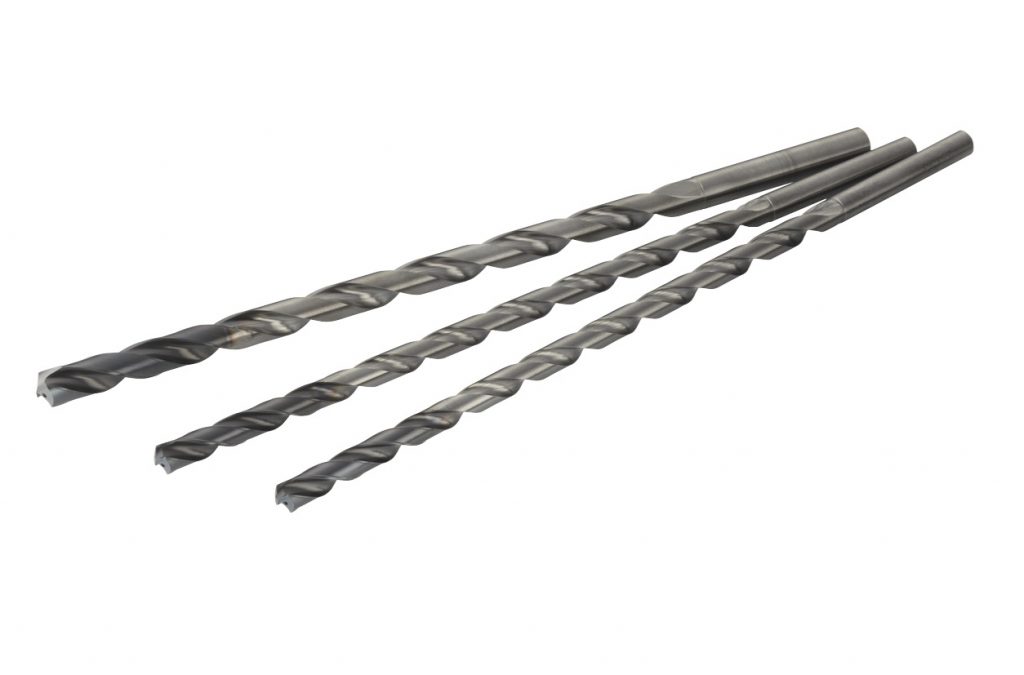
Reverse taper bits have an unusual shape. They get wider as they go away from the tip. This differs from the design of traditional drill bits that have a fixed width along their length. The production of these bits needs careful shaping using CNC grinders. This means gradually broadening their diameter from the point to the handle as going into the material.
The manufacture of reverse taper bits starts with blanks that are precision-ground on CNC grinders. These remove material very accurately to create the required angle of taper without altering important geometrical configurations. Such bits enter workpieces at their tiniest diameter and then increasingly enlarge as they go deeper into them.
Reverse tapered bits first appeared in aviation, where there was a need for enlarging holes while getting great surface quality. The challenging conditions in aerospace led engineers to invent methods for creating such intricate shapes accurately and consistently.
Now, crossing the limits of aerospace, reverse taper processing is a method used in many fields, like making medical gear, vehicles, and precise machining. Reverse taper drill bits make difficult drilling jobs easier and need fewer changes of tools or processes.
The manner reverse taper functions is different from standard drilling. The forces when drilling with a tapered drill bit are more evenly distributed. This lessens stress points, especially when creating deep holes or working with tough materials.
Reverse taper drilled bits get a bigger dimension as they move downwards. This helps with chip removal, which is a big problem for standard drill bits. No blockage occurs in this kind of drill bit, and it makes work easier for deep holes. The drill bits for reverse taper problems, such as worn-out parts, produce smooth holes that do not hurt surfaces.
The reverse taper drill bits allow for smooth-flowing chips. Other drill bits struggle with this issue, especially deep holes where chips get stuck at times. The reverse taper bits that expand gently enable chips to flow, thus relieving any chance of clogging.
Smooth exit of chips results in better surface quality for reverse taper drilled holes. When chips leave without obstruction, they do not scratch hole walls, thus improving their finish during any subsequent operations.
Another heat-reducing benefit comes from the reverse taper drill bits. The gradual width increases and, therefore, balances forces while cutting, thus lowering heat production, which can spoil both tools and workpieces. This thermal advantage prolongs tool life as well as enhances accuracy in holes created by drills.
Yes, reverse taper bits cost more than regular ones. But they last longer, do less work again and again, and make better parts. So, they save money over time.
Application Type | Conventional Drill Performance | Reverse Taper Performance | Improvement Factor |
Deep Hole Drilling | Limited by chip evacuation | Excellent chip flow | 3-4x improvement |
Thin Wall Materials | High deflection risk | Minimal deflection | 5-6x improvement |
Heat-Sensitive Materials | Thermal damage common | Reduced heat generation | 2-3x improvement |
Production Consistency | Variable results | Predictable performance | 4-5x improvement |
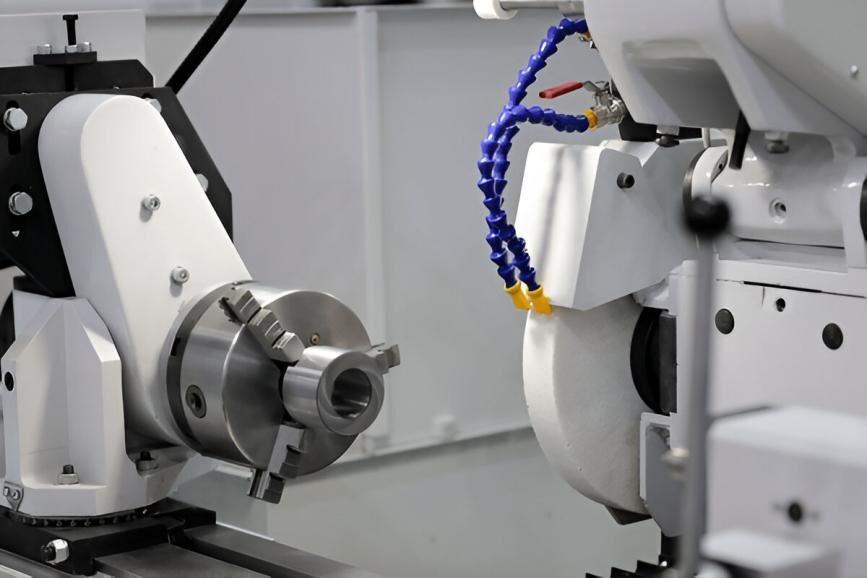
The technology utilized in the reverse taper processing of carbide drill bits is CNC tool grinders, which serve as the enabling technology. These advanced machines should have much more capabilities than those needed when manufacturing conventional drills.
Modern CNC tool grinders feature a multi-axis architecture, enabling reverse taper processing. Such machines normally have five and many more axes of movement. Hence, the position of the workpiece, the position of the grinding wheel, and different angular orientations can be controlled concurrently. These complexities enable the creation of perfect material bevelling patterns, which are required to establish correct reverse taper profiles in carbide drill bits.
The Spindle technology is a key aspect of a CNC tool grinder’s capability in reverse taper work. The high-frequency spindles, with rotational speeds as great as 60,000 RPM, deliver the surface speeds needed to grind carbides efficiently while maintaining the precision required to realize complex geometries. Spindles made to reverse taper carbide drill bits spindles must show an unmatched runout capability of about 0.0001 inches to meet the dimensional tolerances needed on reverse taper carbide drill bit spindles.
Indirectly, the reverse taper processing is influenced by the dressing systems and grinding wheel available on CNC tool grinders. Wheels with specialized Diamonds, specifically designed for carbide materials, offer the greatest performance in terms of cutting efficiency and form retention. The wheel dressing system should ensure that the wheel’s geometry remains precise during the grinding process, as limited wheel dressing can significantly influence the final taper profile.
The sophistication of control systems has significantly changed in a bid to accommodate reverse taper processing needs. Advanced interpolation algorithms Existing modern CNC tool grinders have advanced interpolation algorithms, which compute the complex tool path on the fly. These systems need to synchronize several axes as well as ensure the feed rates and surface speeds are as precise as possible and optimized for carbide grinding.
To make reverse taper carbide drill bits, we need more than just a CNC tool grinder. Each piece of equipment plays a key role in making sure the bits are precise and consistent.
We require optical measurement systems that can check the taper geometry with a sub-micron accuracy. These systems must handle the complex verification for reverse taper bits while providing quick measurements to support production requirements.
Coordinate measuring machines are set up specifically for tool measurement. These machines have specialized software to define and measure the complex surfaces of reverse taper bits. The measurement routines have to account for the continuously changing diameter while still being accurate along the length of the tool.
For carbide drill bit processing, we need work holding systems that position the parts properly during grinding. The systems must be rigid without affecting the final geometry. Hydraulically-jawed systems have better clamping forces and reduce vibrations compared to mechanical ones.
Coolant systems for reverse taper processing must deliver precise flow control and temperature management. The grinding process generates significant heat that can affect both tool quality and grinding wheel performance. Advanced coolant systems provide filtered, temperature-controlled coolant delivered through precisely positioned nozzles that optimize cooling effectiveness.
Environmental control equipment ensures consistent processing conditions. Temperature and humidity variations can affect both machine accuracy and carbide material properties. Climate-controlled grinding rooms maintain stable conditions that support repeatable results in reverse taper processing operations.
Equipment Category | Specific Requirements | Typical Investment Range | Critical Specifications |
CNC Tool Grinder | 5+ axis capability | $300,000 – $800,000 | <0.0001″ runout accuracy |
Measurement Systems | Optical/CMM capability | $50,000 – $200,000 | Sub-micron resolution |
Workholding | Hydraulic precision | $15,000 – $50,000 | <0.0002″ TIR |
Environmental Control | Temperature ±1°F | $20,000 – $75,000 | Humidity control included |
When setting parameters for reverse taper on CNC grinders, the interplay of numerous variables must be carefully managed. The starting point is to understand how the taper geometry relates to the machine’s capabilities.
To set the parameters for reverse taper drill bits, we need to calculate the taper angles. This involves converting the desired taper into machine instructions based on the wheel shape, the placement of parts, and the axis links. This will require specialized software to handle the math and adapt it to each machine’s specific features.
Choosing a speed for the grinding wheel can affect the material removal rates and the surface finish quality in reverse taper processes. For carbide materials, speeds of 5,000-8,000 feet per minute work best. Because contact areas change continuously during shaping, the speeds might need adjustment as grinding continues.
To achieve optimal surface quality and productivity in reverse tapers, it is essential to use proper feed rates. Feed rates have to be kept within limits. Otherwise, grit wheels will become overloaded, or the surface finish will be rough when rates are high, or productivity will remain low when rates are set too low. Due to changing contact conditions over the tapered shape, the optimal feed rate can vary.
Accurate Reverse taper geometry needs accurate part positioning. The drill bit must be right relative to the wheel and machine axes. Misalignment leads to errors in the taper. Fixtures and procedures ensure exact part positioning.
Reverse taper programming is complex. The CNC must coordinate the positions of the wheel and part. Advanced techniques may revise parameters based on actual feedback to maintain accuracy.
In reverse taper grinding, certain hurdles arise in carbide drill bit production that differ from those encountered by conventional approaches. These arise due to the intricate shapes needed, variations in grinding conditions during the process, as well as the heightened precision required for current applications.
A major challenge in reverse taper grinding of carbide drill bits is the loading of the grinding wheel. This occurs when the contact between the wheel and workpiece changes across the taper profile, generating different grinding conditions that result in high contact pressure, leading to uneven surface finishes and dimensional inaccuracies.
The heat buildup and its management during reverse taper grinding are intricate issues. The ever-shifting contact conditions create varying heat generation patterns that can affect both the quality of tools and the performance of grinding wheels. The dimensional errors that accumulate across the taper profile can result from the thermal expansion of carbide drill bits during processing.
Even the most advanced computer numerical control (CNC) tool grinders find it difficult to maintain dimensional accuracy across the entire reverse taper profile. Small errors made at the beginning of the grinding process may multiply greatly as the taper develops, leading to major inconsistencies with the specified geometry. Longer taper lengths and steeper taper angles further worsen this challenge.
The surface finish of the reverse taper profile needs to be uniform. Different grinding conditions can lead to variations in the surface finish, not meeting requirements. To obtain a consistent finish, grinding parameters need to be optimized.
When grinding reverse tapers, workpiece deflection can result in geometric errors, particularly in long or slender drill bits. The grinding forces vary, causing different deflection patterns at different taper points.
For reverse taper carbide drill bits, a couple of considerations should be taken into account in order to maximize tool life, thus understanding wear mechanisms and failure modes. Their shape and cutting conditions cause wear patterns that are unlike standard drill bits.
Optimal edge preparation depends on proper grinding of reverse taper carbide drill bits. Sharp edges lower forces and heat, thus increasing the tool life in use and ensuring precision and surface integrity.
Honing or conditioning of edges clears microchips and stress spots for reverse taper bits. This preparation caters to the geometry along the taper and ensures longevity.
Choosing suitable coatings is vital for reverse taper carbide drill bits; though advanced coatings enhance tool life, make sure they fit well with the geometry and cutting conditions around. TiAlN, AlCrN, and diamond-like carbon coatings have shown great results.
Drilling with reverse taper drill bits needs to adjust to the changing diameter as you go deeper. The speeds and feeds must be optimized to suit these variations, thus promoting a longer lifespan for the tools.
Good cooling is essential for reverse taper drill bits due to their special shapes. The best way to cool here is by using high-pressure coolant directed at the right spots. This helps manage heat, thus increasing tool life.
Monitoring cutting force, vibration, and size helps predict drill wear on time. Early warning allows for planned changes, preventing failure or damaging the workpiece.
Reverse taper processing is crucial for precise drilling. It utilizes CNC grinders and unique grinding strategies to enhance chip clearance and surface smoothness and lessen heat compared to traditional methods. Although costly, advanced equipment and skills improve tool lifespan, lower rework, and provide uniform quality in aerospace, medical, and auto sectors. As precision and efficiency grow, reverse taper processing is a must for manufacturers to remain competitive. To maximize its potential, focus on grinding settings, host controls, and optimization of cutting conditions.
Built for durability and precision, our carbide end mills, inserts, and drills are trusted in aerospace, automotive, and mold-making industries.
From spiral bits to specialty cutters, our woodworking tools ensure clean cuts and extended tool life for professionals.
We usually reply your message within 3 bussiness hours.